La vulcanización es el proceso más crítico en la fabricación de caucho, el cual transforma el caucho crudo, blando y plástico, en productos terminados elásticos, duraderos y estables. El control preciso de la temperatura durante la vulcanización determina directamente el rendimiento físico, la estabilidad dimensional y la vida útil de las mangueras de caucho, sellos y piezas de caucho personalizadas, convirtiéndose en el estándar fundamental para distinguir los productos de caucho de alta calidad.
La temperatura de vulcanización es la clave para formar estructuras de reticulación molecular del caucho. Cada material de caucho tiene su rango exclusivo de temperatura de curado. El EPDM y el NBR adoptan una temperatura de vulcanización convencional de 140℃-160℃ para garantizar una reticulación uniforme. El caucho de silicona requiere una vulcanización primaria de 160℃-180℃ y una vulcanización secundaria a alta temperatura para eliminar las impurezas residuales. El caucho fluorado FKM necesita un curado a mayor temperatura para lograr una excelente resistencia al calor y a la corrosión.
Un control de temperatura irrazonable causará defectos de calidad irreversibles. Una temperatura excesivamente alta provoca quemaduras en el caucho, agrietamiento de la superficie, mayor dureza y menor tenacidad. Una temperatura demasiado baja resulta en una vulcanización insuficiente, una reticulación molecular incompleta, una mala resistencia a la compresión, una fácil deformación y el fallo por envejecimiento de los productos.
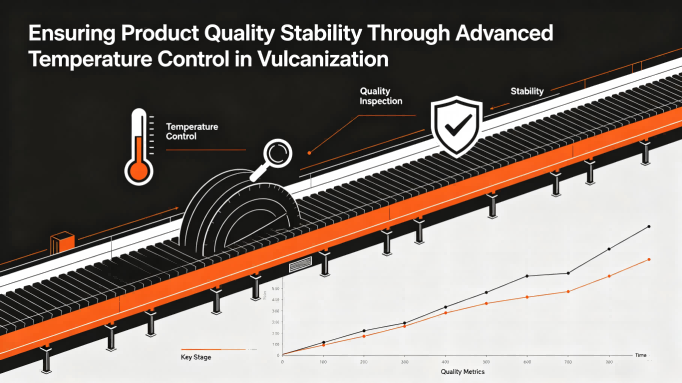
Para lograr una calidad constante, adoptamos un control de temperatura constante en todo el proceso y tecnología de vulcanización por calentamiento por etapas. Combinado con el sistema de gestión de calidad IATF16949, estandarizamos los parámetros de temperatura, presión y tiempo para diferentes materiales de caucho y especificaciones de producto. El monitoreo de temperatura en tiempo real y las pruebas de muestreo por lotes eliminan eficazmente las diferencias en el rendimiento del producto.
La gestión científica de la temperatura de vulcanización garantiza una elasticidad estable, rendimiento de sellado, resistencia al envejecimiento y precisión dimensional de los productos terminados. Reduce en gran medida las tasas de fallo de los productos y los costos de mantenimiento para equipos automotrices, industriales y de HVAC. Confiamos en un control de proceso preciso para proporcionar a los compradores globales soluciones de caucho de alta estabilidad y larga vida útil.




 Servicio en línea


